
Pressure-Treated Wood
Pressure-treated pine is the most common deck material in Georgia. It has the lowest upfront cost and a classic wood look, and it can be stained in many colors.
- Lower initial cost
- Natural wood appearance
- Needs cleaning and staining or sealing every few years
- Can crack, warp and splinter as it ages, especially in heat and humidity
Composite Decking (Trex, TimberTech)
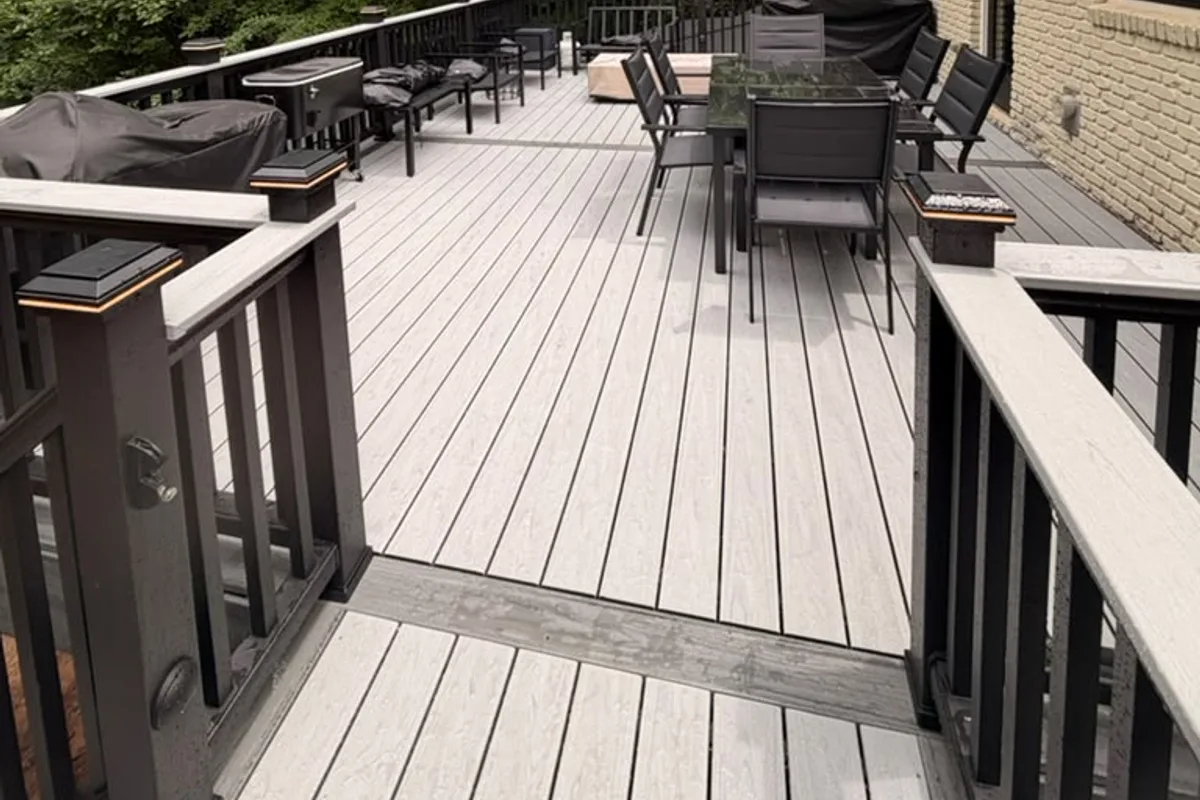
Composite boards are made from a blend of wood fibers and plastics, and capped composites add a protective outer shell. They're designed to resist fading, staining and moisture.
- Higher initial cost than wood
- Low maintenance: no sanding, staining or sealing
- No splinters, comfortable for kids and bare feet
- Consistent color and many wood-grain styles
Side-by-Side Comparison
| Pressure-treated wood | Composite | |
|---|---|---|
| Upfront cost | Lower | Higher |
| Maintenance | Regular cleaning, staining or sealing | Occasional cleaning |
| Splinters | Possible as it ages | No |
| Look | Natural wood, can be stained | Wood-grain styles, consistent color |
| Best for | Budget-focused projects | Low maintenance and a long-term finish |
What About the Frame?
Even composite decks are usually built on a pressure-treated wood frame. That's why the framing, the spacing of the joists and the protection of the structure matter just as much as the boards you see. If you're resurfacing an old deck with composite, the existing frame needs to be checked first.
Which One Should You Choose?
If upfront budget is the priority and you don't mind regular upkeep, pressure-treated wood is a solid choice. If you'd rather spend weekends enjoying the deck than maintaining it, composite is usually worth the investment.
We build both. During your estimate, we'll show you options and explain the differences for your specific deck. Learn more about our custom deck building or call (470) 525-4606.